

What are PSUs and PDUs?
Posted by RackLink on Mar 16, 2026
What are PSUs and PDUs?
A PSU (Power Supply Unit) and PDU (Power Distribution Unit) are both electrical components with different functions. A PDU will convert power across devices while a PSU will convert power for individual components.
What is PSU?
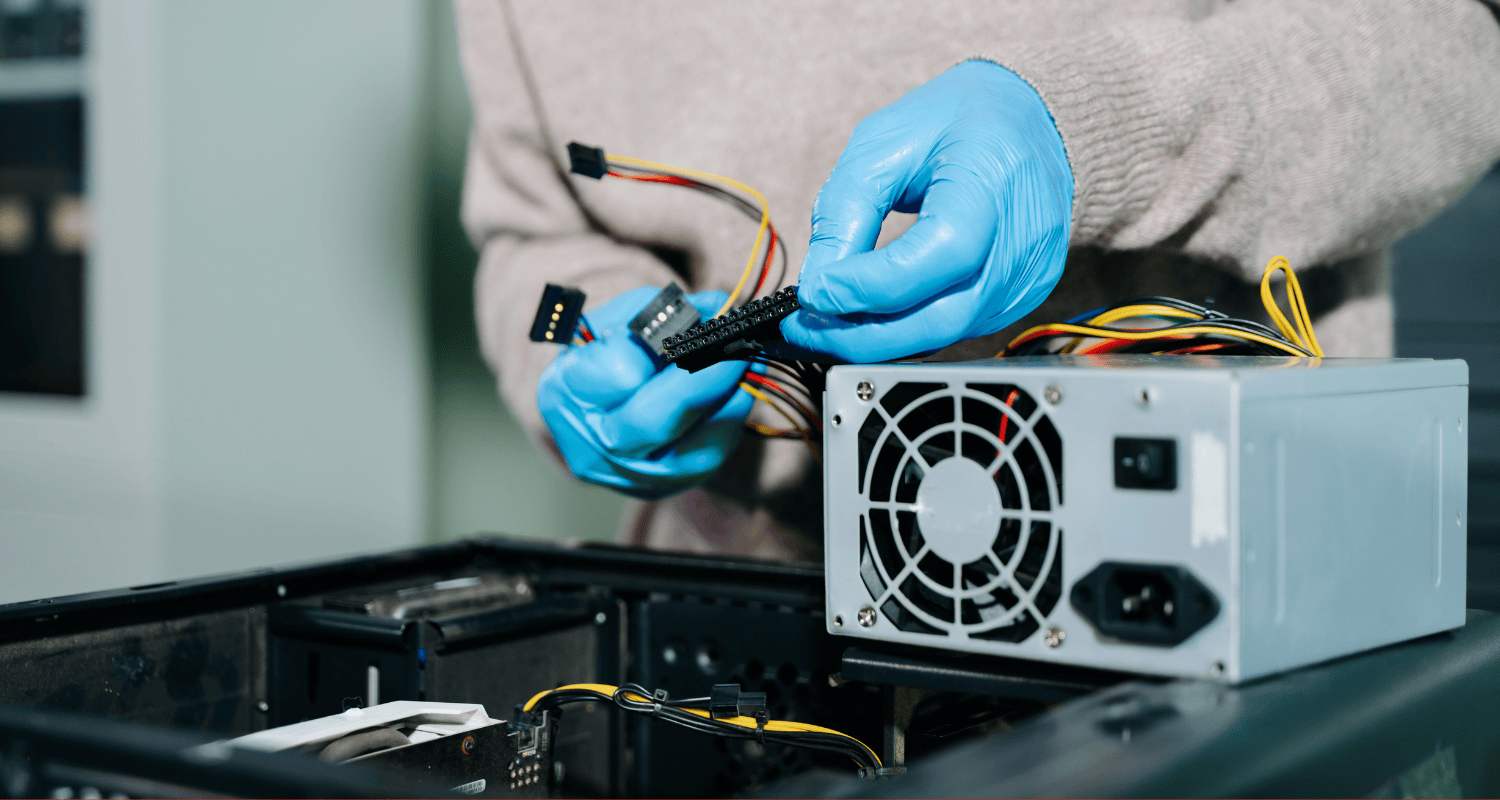
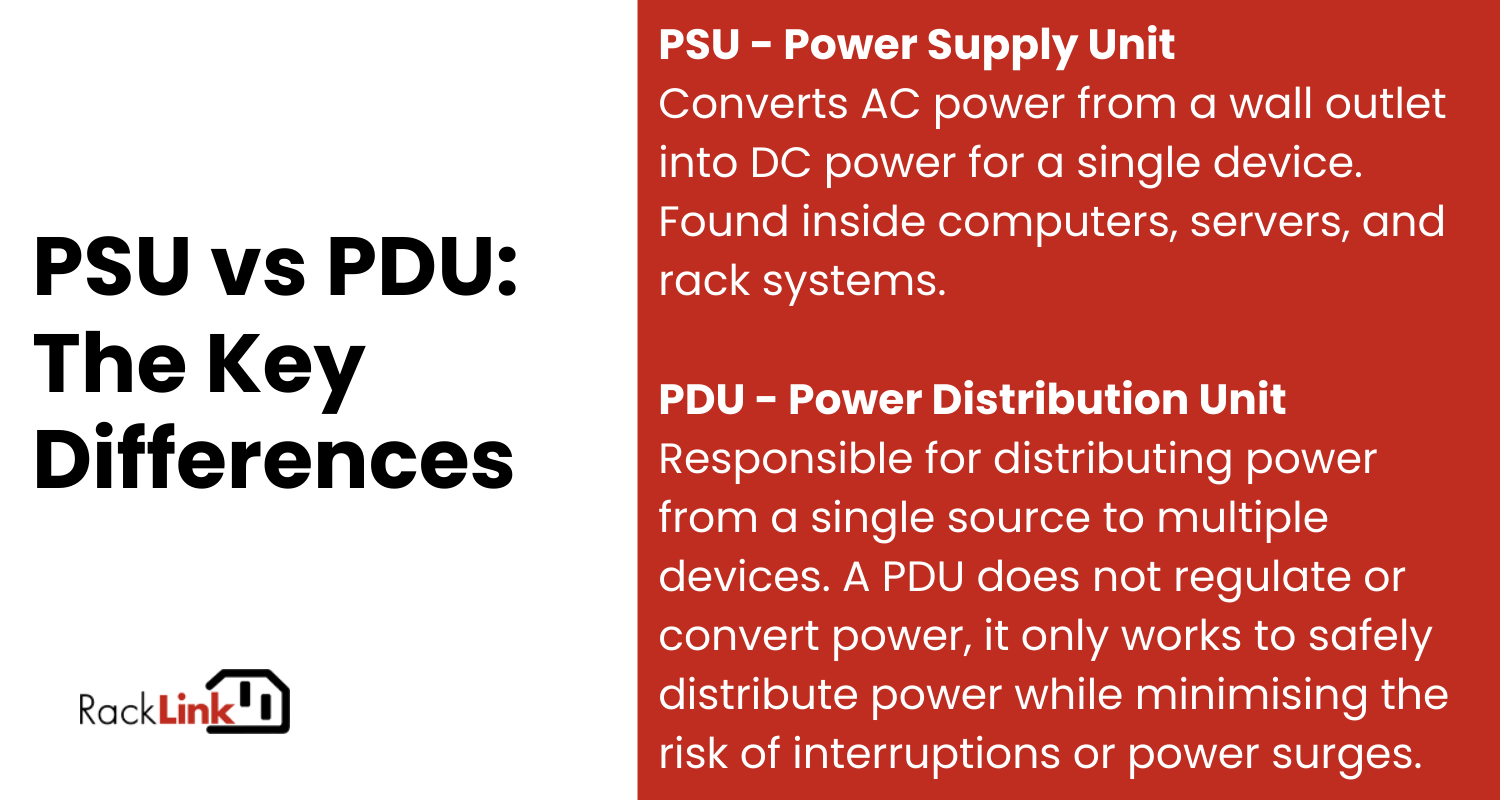
A PSU (Power Supply Unit) is an internal hardware component that converts electrical current into a suitable operating voltage for a single device. A PSU can have different ratings to regulate power for computers, server racks, and other types of equipment.
A PSU is designed to convert and regulate power for one device, which means it is typically an internal component that is built into a device, but is also available as a modular part for more complex systems.
A PSU works by converting AC (alternating current) from a wall outlet into DC (direct current), a requirement for most electrical equipment. Wattage is the main rating to look for when replacing a PSU - this refers to how much power the PSU will supply and must be matched to the device’s own rating.
Common power supply units include:
- Desktop computer power supply units (usually rated for 400-1000 watt)
- Server power supply units placed inside server systems to provide continuous power for hardware.
- Rack-mounted modular units for use in data centre systems that can be replaced during routine maintenance without interrupting operation.
What is PDU?
A PDU (Power Distribution Unit) is responsible for distributing power from a single source to multiple devices. The most common type of PDU is a power strip.
Unlike a PSU, however, a PDU does not regulate or convert power for connected devices, it only works to safely distribute power to devices while minimising the risk of interruptions or power surges.
PDUs range from basic strip-style units that function like heavy-duty power boards, to intelligent (or "smart") PDUs that allow remote monitoring, load balancing, and per-outlet control. Smart PDUs offer greater monitoring and control over power distribution, ideal in commercial environments like data centres and server farms.
Common power distribution units include:
- Rack-mounted PDUs offered in vertical or horizontal configuration inside a server rack with GPO and IEC connections.
- Switched PDUs which allow power supply to be controlled separately for individual devices. Power supply can be cut off to devices that are being repaired or replaced without removing power from the other devices.
- Intelligent PDUs that offer power monitoring, environmental sensors, and network connectivity for use with data centre management software.
When Should You Replace a PSU or PDU?
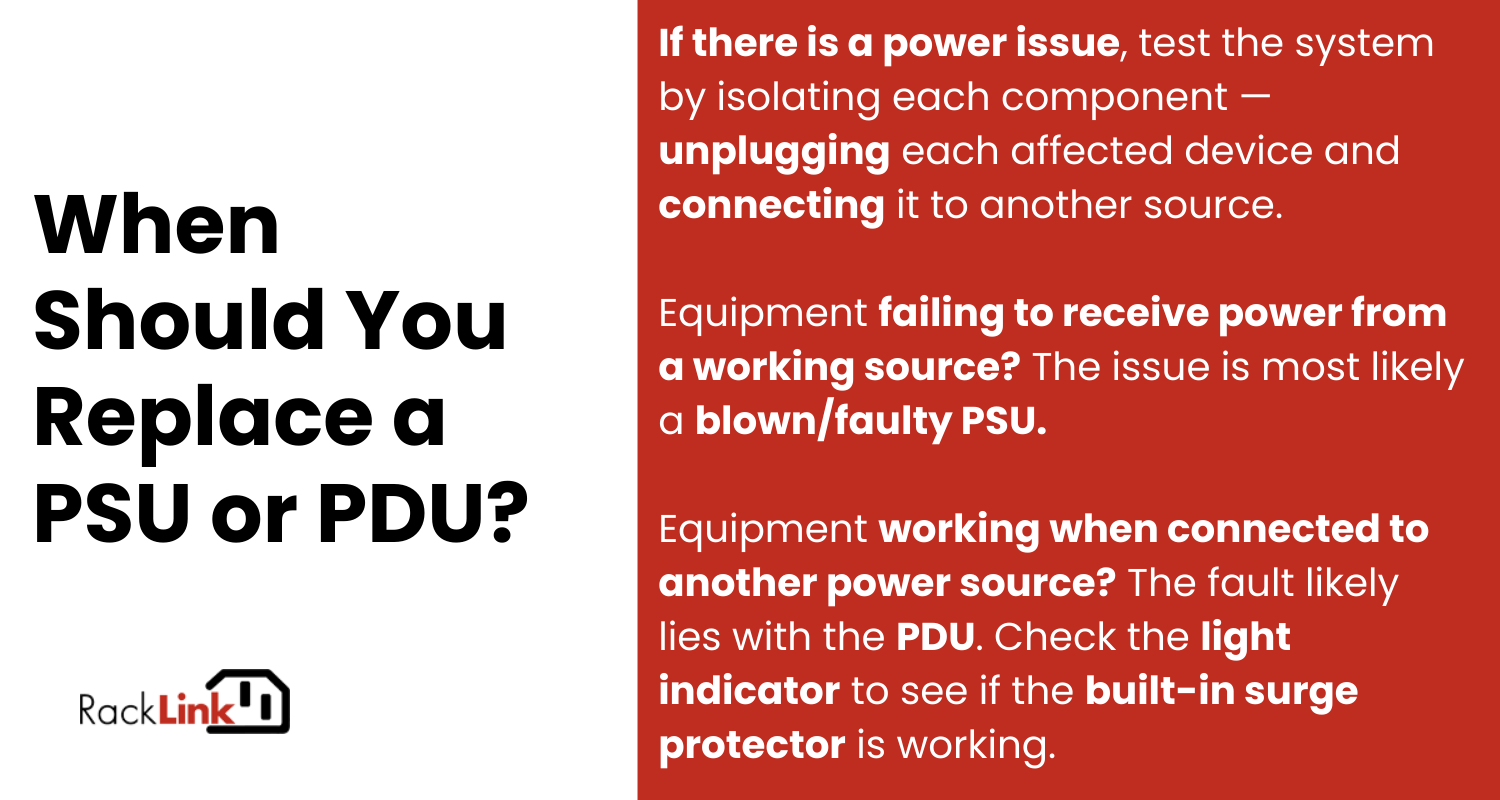
If there is a power issue within a system, it’s likely that the problem lies with either a PSU or a PDU. The system can be tested by isolating each component at a time - unplugging each affected device and connecting it to another source.
For equipment that fails to receive power from a working source (like a wall socket), the issue is most likely a blown/faulty PSU. Repairing the equipment’s PSU requires the manufacturer’s expertise (in the case of modular parts, replacement may be possible).
If the equipment works when connected to another power source, the fault likely lies with the PDU. High-quality PDUs are equipped with a light indicator to show whether the built-in surge protector is working - this is an easy way to tell if the PDU needs to be replaced.